

Don't Be in the Dark on Ventilation- Help Your Attic Breathe
This post deals with the types of passive attic ventilation, the need for ventilation, and how you can know if your attic is properly ventilated.
While it may not be the most glamorous aspect of homeownership, attic ventilation plays a crucial role in ensuring the health and integrity of your home. In this article, we’ll explore the passive ventilation systems installed in most homes, their importance, and how to determine if your attic is adequately ventilated with a basic visual inspection.
Often when inspecting a dark attic, I do something that seems counter intuitive. I turn off the lights! What am I doing? I'm checking your ventilation. I want to see "air leaks" in your attic that were purposefully installed by the builder to allow your attic to breath properly. I'm looking at your soffit vents and roof vents for the presence (or absence) of light. This often explains why airflow is discernable and temperatures are bearable or why the attic feels so stuffy and mildew is present on rafter boards.
Passive ventilation is the most common type of attic ventilation and relies on natural air movement. It includes roof vents, ridge vents, and soffit vents that allow air to flow in and out without any mechanical assistance. The idea is simple: cool air is drawn in through the soffit vents and helps warm air to rise and exit through the roof vents. And, it is this natural exchange that is crucial for preventing heat and moisture build-up in your attic.
Adequate ventilation in attics is essential because high heat can cause roofing materials to break down quicker and high humidity levels can lead to mold and mildew growth, compromise air quality, and create potential health issues. Proper ventilation in your attic helps to regulate temperature and moisture levels, extending the lifespan of your home’s structural components. Furthermore, a properly ventilated attic assists your home’s HVAC system to function more efficiently and can lead to lower energy bills and a reduced environmental impact.
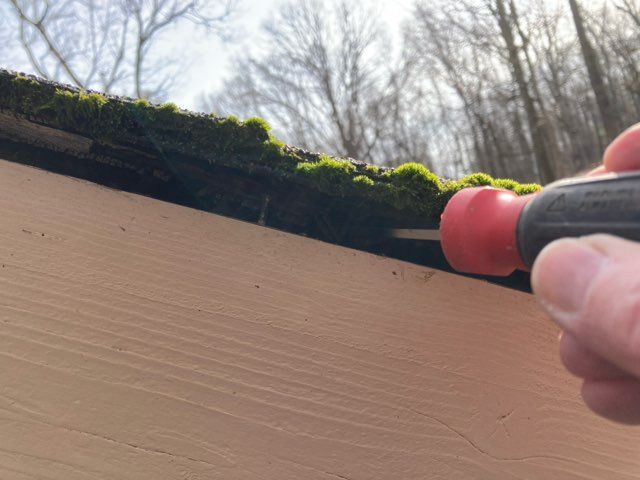
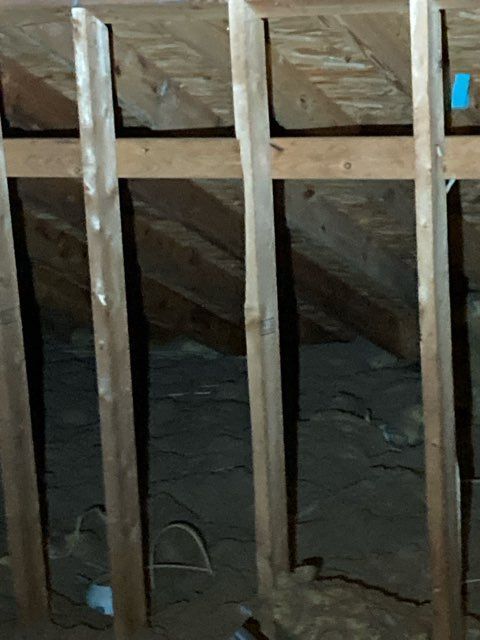
In my experience, contractors often install these required ventilation systems, but sometimes fail to do the little things that ensure they function as designed. In the case of soffit vents that are not functioning, it is often because the blown loose fill insulation is allowed to cover the soffit vents- just as in this inspection photograph! The contractor had forgotten to install insulation baffles, which can be as simple as pieces of cardboard that protect the soffit vents from the blown insulation and allow for continued airflow. In the case of ridge vents, I have discovered on new builds, particularly, that the contractor properly cuts the deck sheathing, but forgets to cut through the underlayment and asphalt shingles before installing the ridge vent. This renders an otherwise good design powerless to vent that hot air that becomes trapped on the underside of the roof.
So, the next time you are in your attic, wearing your proper PPE and can safely do so, take a moment and turn off the lights. I hope you find yourself smiling in the dark, but if not, you have just discovered something that will help you improve your home's health and efficiency!
Your Friends at Higher Rock Inspections