

Attention on Deck! Why This Area Should Get a Closer Look.
I'm always amazed at the number of common defects I find on the decks that I inspect! This article discusses deck defects and why they often rise to the level of safety concerns.
When I was in the Navy, someone nearest the door would call out "Attention on deck!" whenever the commanding officer came into the room. For just a moment, I want to call your attention to the deck. Of all the systems I inspect on a home, I have found the most common and pervasive safety issues are associated with decks. Not electric, or plumbing, or foundations, or roofs- decks win for the most consistent safety defects. I think the reason for this is probably twofold. First of all, decks are overwhelmingly made of wooden components- wood that is continually being exposed to the elements. Secondly, decks are frequently constructed apart from the home (i.e., later in time by someone other than the original contractor). Decks are often an add-on to a new home and even fall into the category of a good DIY project for the handy homeowner. Undoubtedly, these two factors contribute to the defects and safety issues I regularly observe on decks.
So, let's explore some of the more common safety defects associated with decks. Almost universally, the handrails on steps leading to the deck are not of a graspable design and often not properly secured to the home or terminating at a newel post. These are safety issues that can result in serious injury if someone loses their footing on the steps. With steps and railing, it is also common to find trip hazards resulting from differing riser heights, particularly at landings and ramp transitions. Substantial height differences between risers affect the natural gait and timing and cause an individual to stumble. Railings are often designed horizontally rather than vertically or spaced too far apart. Horizontal railing can allow for a small child to climb and fall from the deck and wide rail spacing may be sufficient for a child to squeeze through or become trapped.
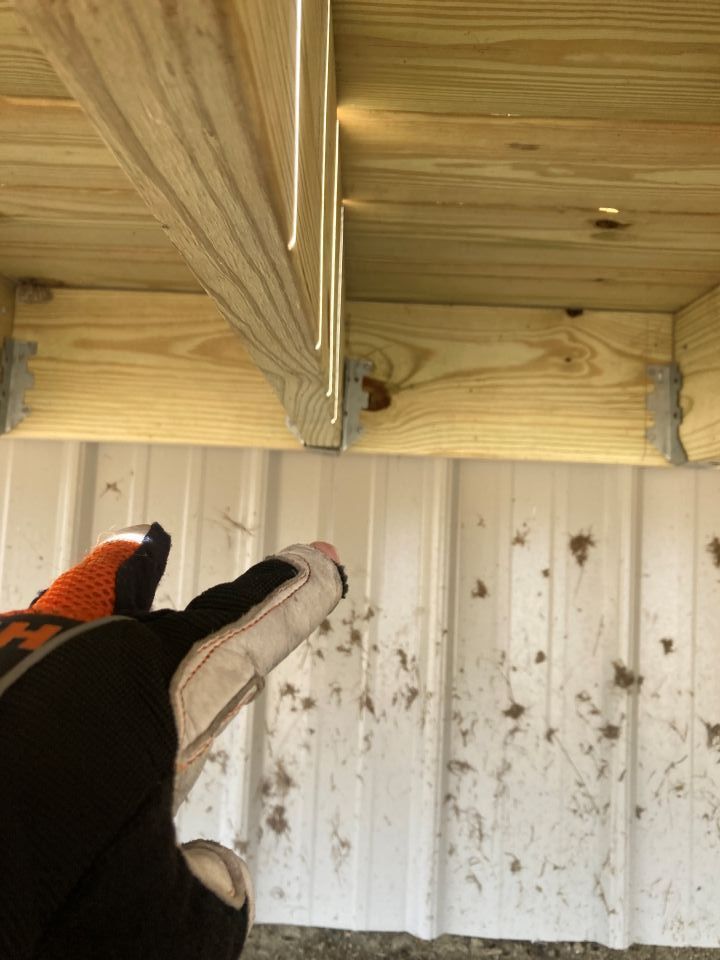
Each year, people are injured from partial deck collapses or from decks fully detaching from structures. These deck failures can often be contributed to improper attachment. I have observed decks being held to the house with only a few concrete or deck screws or with no attachment at all (as in this inspection photo). This is nowhere near safe, considering the sheer weight of deck materials and the live loads that are additionally placed on them! Proper attachment involves installation of correctly spaced, 1/2 inch through bolts or lag screws into the rim joist of the house. The spacing for these varies based on the length of the ledger board and hardware used, but there should be multiple attachment points in a staggered fashion between each deck joist. At the band joist end of the deck, appropriately sized joist hangers (the joist hangers in the inspection photo are undersized) should be attached on each joist with galvanized or stainless steel joist hanger nails installed in each hole .
Finally, wood rot is a key contributor to deck failure. A lack of ledger flashing at the deck attachment to the home is a very common defect I observe (missing from the ledger board in the picture). Ledger flashing serves to direct water away from the home and prevent moisture from collecting against the house and causing wood to decay. Deterioration of the ledger board and rim joist often go unnoticed because of their obscure locations until the deck looses support and pulls away from the house! This could cause serious injuries or worse. Wood rot and deck failure also occurs on deck post and landings where there are not proper concrete bases and the wood is in direct contact with soil. Even treated wood will eventually deteriorate and attract wood damaging insects, such as termites, if placed directly on the soil.
So, what can you do to ensure that the deck on your home is secure? The first thing you should do is to have your home (or prospective home) inspected by someone who understands proper deck construction design. This cannot be overstated in my view because decks are notoriously constructed improperly! Once you have addressed safety issues, it is essential to be proactive about regular deck maintenance. Take the opportunity from time to time to do a good visual inspection and ensure your attachment points still look solid, deck boards are firmly attached, there is no evidence of excessive moisture or wood rot, your deck sealant is doing its job, etc. Regular inspections can help catch these maintenance items early and allow for timely repairs, ensuring you can enjoy this outdoor space for years to come!
Your Friends at Higher Rock Inspections